Abdomen and waist
Upper and lower abdomen, including the pubic area when examination supports it.
Liposuction Austin, also called lipoplasty or fat-removal surgery, removes fat cells from localized deposits that have not responded to diet and exercise. It is not a treatment for obesity and it cannot remove 100 pounds.
Dr. Robert Whitfield MD, a board-certified plastic surgeon, plans liposuction with three anesthesia pathways, suction-assisted and MicroAire power-assisted technique, optional same-session fat transfer, and optional BodyTite or Morpheus8 after examination. Preparation and recovery follow the SHARP Method at the West Lake Hills office and, when needed, SHARP Surgery Center.
Anesthesia pathways: awake, sedation, general
Methods: SAL and MicroAire PAL
West Lake Hills office and surgery center
Board-certified plastic surgeon
Liposuction surgery uses small access points and a cannula under suction to remove fat cells from selected territories. It is designed for patients with specific areas of localized fat who have already tried nutrition and movement. Through liposuction a physician can contour many regions, including the abdomen, flanks, thighs, arms, back, chest, chin, and neck.
Tumescent fluid, a dilute local anesthetic with other agents, is placed in the tissue first. That step numbs the area and makes fat easier to remove. What happens next depends on the plan: some patients remain awake, some receive twilight or IV sedation, and some receive general anesthesia. This practice does not lock every patient into one of those settings.
Material risks discussed at consultation include contour irregularity, swelling, bruising, temporary numbness, seroma, skin laxity, and anesthesia-related events. Same-session fat transfer adds variable retention, fat necrosis, oil cysts or calcifications, and possible extra imaging. Candidacy, alternatives, and consent are individualized.
Any territory with enough localized fat and acceptable skin quality can be discussed. The list below is common, not a package menu.
Upper and lower abdomen, including the pubic area when examination supports it.
Love handles, lower back, and selected upper-back rolls.
Inner, outer, and anterior thighs. Knees when the fat is localized.
Upper arms when the complaint is fat, not only loose skin.
Selected male chest contouring after examination.
Submental fullness. Facial fat grafting, when indicated, is a separate plan.
Better candidates have stubborn pockets rather than a large, unstable weight change. Recent large weight swings are a reason to wait and reassess.
Good elasticity helps the skin follow a new contour. Thin or loose skin does not always rule a patient out. It changes whether BodyTite, Morpheus8, or excision belongs in the conversation.
Medical history, medications, and the planned map of areas decide whether awake, sedation, or general anesthesia is appropriate. The CRNA and surgeon set that together.
Searchers ask this because some clinic pages talk about fat removal as if volume were unlimited. Liposuction is contouring. It is not a substitute for nutrition, movement, or bariatric care. Fluid shifts, blood loss, and remaining skin set a safety limit that is decided in consultation, not advertised as a pound target.
Patients whose first goal is a large weight change are directed to a weight plan first. Liposuction can be reconsidered later for leftover pockets. That sequence protects both safety and the contour result.
Some Austin tumescent pages say no general anesthesia is needed. Some laser-lipo pages sell only awake cases. This practice can do awake tumescent cases and can also use sedation or general anesthesia when the map, duration, combined procedures, or patient preference call for it. A Certified Registered Nurse Anesthetist (CRNA) participates when sedation or general anesthesia is used.
Local anesthetic is placed in the tissue. The patient remains awake. This can fit selected, more limited plans. It is not appropriate for every area or every medical history.
Intravenous sedation reduces awareness without a general anesthetic. It is often chosen when the plan is larger than a small awake case and the team still prefers to avoid general anesthesia.
General anesthesia is used when the map, duration, combined fat transfer, or patient factors call for a protected airway. It is a setting, not a status symbol, and not required for every liposuction plan.
Dilute local anesthetic is injected into the planned territory. Small incisions are placed in less visible locations. A cannula is advanced through those access points while suction removes fat. The surgeon sculpts by changing depth and direction rather than by emptying one spot.
Compression is typically used afterward. Timing, garments, and activity limits come from the surgical team, not from a public timeline. This page does not publish day or week counts because those vary with the map of areas, the anesthesia plan, and the patient.
Standard SAL remains a core method. Tumescent fluid plus suction through a small cannula is still the foundation of many plans.
PAL uses a rapidly oscillating cannula. It can help in fibrous areas and when a controlled harvest is needed for fat transfer. This is the system sometimes heard as micro PAL.
SmartLipo laser lipolysis and VASER ultrasound-assisted liposuction are not on this menu. Optional tightening here is radiofrequency: BodyTite internally and Morpheus8 at the surface, after analysis and consent.
Many Austin liposuction pages stop at discarding the fat. When there is enough donor tissue and another area needs volume, harvested fat can be processed and placed in the same operation. Retention is not guaranteed. Published fat-grafting safety research includes PMID 29044365.
Breast volume with the patient’s own fat is planned on fat grafting in Austin. That page owns cup-size and natural-augmentation questions. This page owns the harvest and body-contouring decision.
Removing fat always affects the overlying skin. Competing pages sometimes say small cannulas make folds disappear. That overstates what suction can do. This practice offers BodyTite (internal radiofrequency-assisted lipolysis) and Morpheus8 (fractional radiofrequency microneedling) on treated territories after examination and consent. They are not added to every case.
SMART Tummy is the combined abdominal plan: liposuction, BodyTite, and Morpheus8 together. It is not a tummy tuck. Patients with marked skin excess or muscle separation may still need surgical excision.
Morpheus8 consent includes device-specific risks. The U.S. Food and Drug Administration has issued a safety communication on certain radiofrequency microneedling uses. That discussion belongs in consultation.
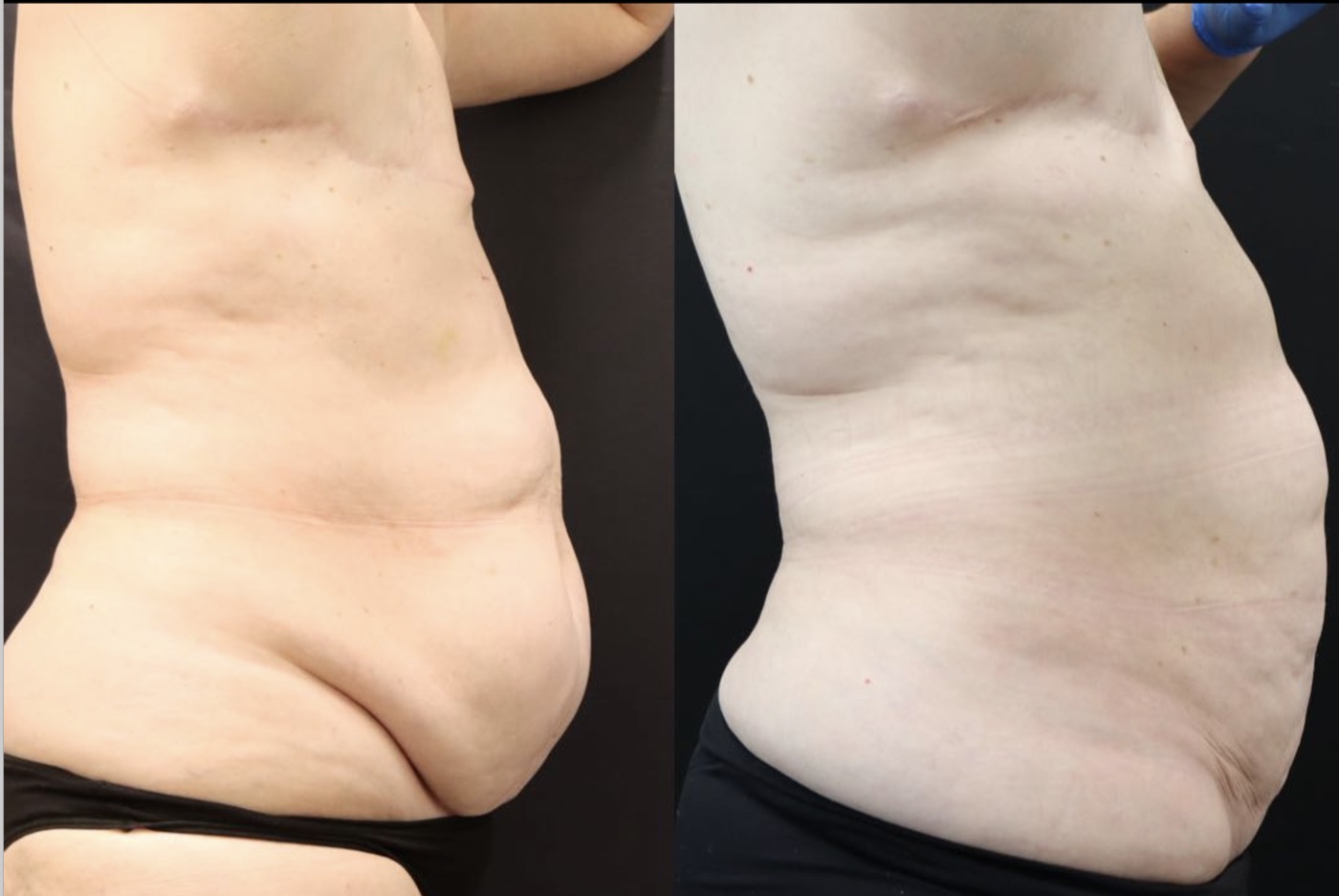
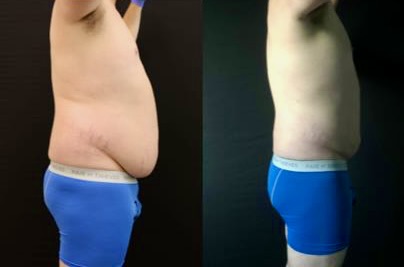
After fat is removed, remaining skin has to redrape. Sufficient elasticity favors a smoother contour. Poor elasticity, thin skin, or prior stretch can leave laxity. That is a planning fact, not a reason to skip the visit. It is the reason tightening adjuncts and, in some patients, excision stay on the table instead of being promised away by a smaller cannula.
Consultation, preparation, lymphatic care, and recovery-support modalities are planned here, in the West Lake Hills corridor searchers associate with Bee Cave Road practices.
Call (877) 785-2832
Text Us (512) 643-5298
Operative liposuction, including plans that combine fat transfer or BodyTite, can be coordinated at SHARP Surgery Center rather than treated as a spa add-on.
Surgery center (512) 541-8136
Aftercare is a core part of this liposuction offering. Competing pages send patients home with a compression garment and a blog timeline. This practice can add hands-on and device-based support in office. These modalities are optional. They do not replace the operation, and one session is not lasting clearance.
Quotes are itemized after consultation. Cost tracks the number of areas, SAL versus PAL, the anesthesia pathway, the facility, and whether BodyTite, Morpheus8, or same-session fat transfer is selected after evaluation. Recovery-support sessions and supplements are quoted separately when they are part of the plan. Financing details are on the financing page. This page does not publish fees.
Male plans often focus on the abdomen, flanks, chest, and chin. The aesthetic goal is usually a sharper contour, not a copied female pattern. Hi-def six-pack marketing is not used here. Examination decides whether fat removal alone is enough or whether tightening adjuncts belong in the plan.
Austin
Patients from Austin are seen at the Walsh Tarlton office.
West Lake Hills and Bee Cave
Patients from West Lake Hills and Bee Cave are seen at the Walsh Tarlton office.
Lakeway
Patients from Lakeway are seen at the Walsh Tarlton office.
Round Rock
Patients from Round Rock are seen at the Walsh Tarlton office.
Cedar Park
Patients from Cedar Park are seen at the Walsh Tarlton office.
Georgetown
Patients from Georgetown are seen at the Walsh Tarlton office.
Consultation, preparation, and recovery support are based at 2530 Walsh Tarlton Lane, Suite 100, Austin, TX 78746, in West Lake Hills. Operative liposuction is coordinated at SHARP Surgery Center, 4544 S Lamar Blvd, Unit 655, Austin, TX 78745, when the plan requires a procedure setting.
No. Awake tumescent local anesthesia, twilight or intravenous sedation, and general anesthesia are all available. A Certified Registered Nurse Anesthetist (CRNA) participates when sedation or general anesthesia is selected. Clinics that advertise that no general anesthesia is needed are describing their own pathway, not a rule for every patient or every map of areas.
Liposuction removes localized fat cells. It is not bariatric surgery and it is not a treatment for obesity. Safe removal is limited by anatomy, fluid shifts, and skin quality. Patients whose goal is a large weight change need a weight plan first. Examination decides whether contouring is appropriate later.
Common territories include the abdomen, flanks, back, hips, thighs, arms, chest, chin, and neck. The map is set after examination, not from a branded package name.
When there is enough donor fat and another area needs volume, harvested fat can be processed and transferred in the same operation after candidacy review. Fat survival and final volume vary. Breast fat grafting details live on the fat grafting in Austin page.
No. This practice uses suction-assisted liposuction and MicroAire power-assisted liposuction. Optional tightening uses BodyTite and Morpheus8 after analysis and consent, not laser lipolysis or ultrasound-assisted liposuction.
Fat cells removed from a treated area do not return. Remaining cells can enlarge if body weight rises, and untreated areas can still gain fat. Stable weight is part of keeping a contour change. No result is guaranteed.
Cost depends on the number of areas, SAL versus PAL, the anesthesia plan, the facility, and whether BodyTite, Morpheus8, or same-session fat transfer is added after evaluation. An itemized quote is given after consultation. Fees are not published on this page.
Not always. Liposuction addresses fat. Marked skin excess or separated abdominal muscle may need excision. SMART Tummy is this practice's combined abdominal plan of liposuction, BodyTite, and Morpheus8. It is not a tummy tuck.
Dr. Robert Whitfield has guided thousands of patients through surgical decisions with clarity, data, and a personalized plan. Your consultation is where that plan begins.
Not ready to book? Download the free Inflammation Support Guide to start your journey.